
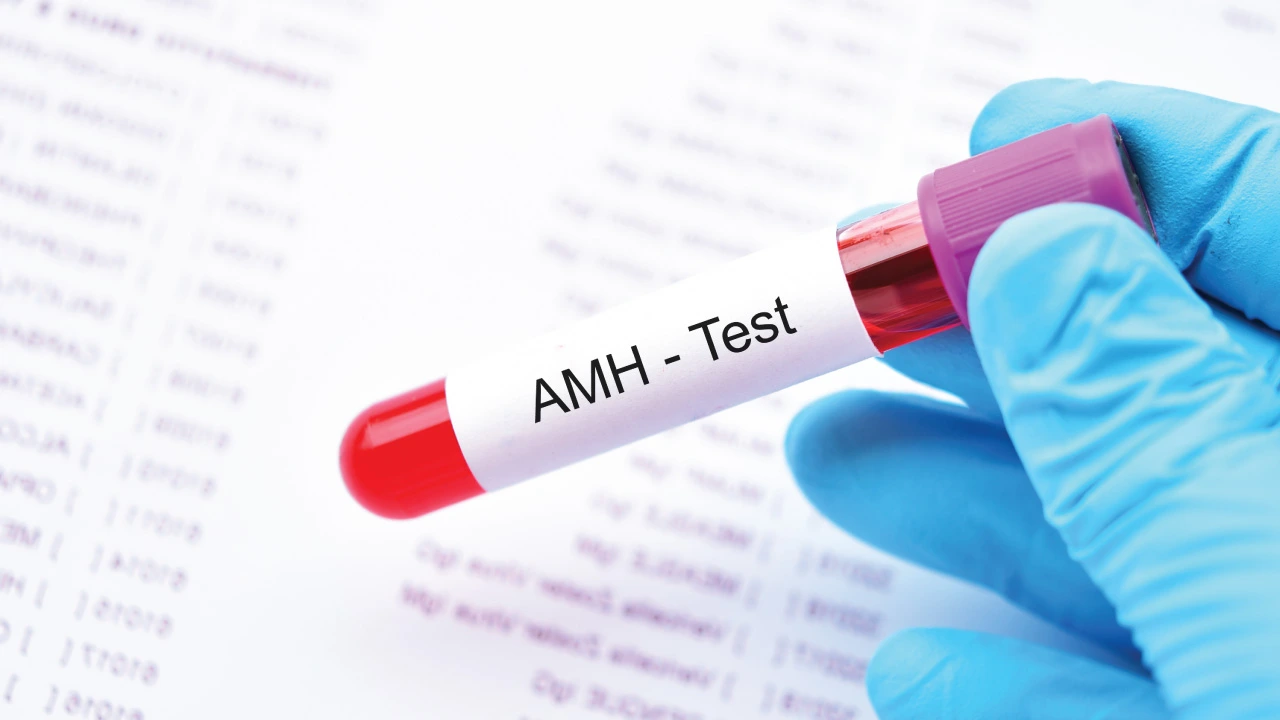
For many women planning a pregnancy, understanding fertility can be both empowering and reassuring. One of the most commonly used tests in fertility evaluation today is the Anti-Müllerian Hormone (AMH) test. This simple blood test provides valuable information about a woman's ovarian reserve and helps doctors assess reproductive potential.
While AMH is not a direct measure of a woman's ability to conceive, it plays an important role in fertility assessment, family planning, and fertility treatment decisions. Understanding what AMH is and what the results mean can help women make informed choices about their reproductive health.
What Is AMH?
Anti-Müllerian Hormone (AMH) is a hormone produced by small follicles in the ovaries. These follicles contain immature eggs that have the potential to mature and be released during ovulation.
AMH levels reflect the number of remaining eggs within the ovaries, commonly referred to as ovarian reserve. Since women are born with a fixed number of eggs, AMH naturally declines with age as the ovarian reserve decreases.
Why Is AMH Important In Fertility Assessment?
AMH testing helps doctors estimate how many eggs remain in the ovaries. It provides insight into ovarian reserve and helps identify women who may have a reduced egg supply.
The test is commonly used for:
- Fertility evaluation
- Family planning discussions
- Assessment before fertility treatments
- Predicting response to ovarian stimulation during IVF
- Evaluating premature ovarian insufficiency
- Supporting the diagnosis of polycystic ovary syndrome (PCOS)
How Is The AMH Test Performed?
AMH testing requires a simple blood sample. Unlike some reproductive hormone tests, AMH levels remain relatively stable throughout the menstrual cycle. This means the test can usually be performed on any day of the cycle.
Results are generally available within a few days, depending on the laboratory.
What Do AMH Levels Indicate?
Higher AMH Levels
Higher AMH levels generally suggest a larger ovarian reserve. Women with PCOS often have elevated AMH levels because they have a greater number of small follicles in the ovaries.
However, a high AMH level does not necessarily mean a woman is more fertile than others.
Normal AMH Levels
Normal AMH levels indicate an ovarian reserve that is generally appropriate for a woman's age. These levels suggest that the ovaries contain a reasonable number of remaining eggs.
Lower AMH Levels
Low AMH levels may indicate diminished ovarian reserve, meaning the number of remaining eggs is lower than expected.
While low AMH may suggest reduced fertility potential, it does not mean pregnancy is impossible. Many women with low AMH levels conceive naturally, especially if they continue to ovulate regularly.
AMH And Age
Age remains one of the most important factors affecting fertility. Although AMH provides information about the quantity of eggs, it does not assess egg quality.
As women age, both the number and quality of eggs decline. Therefore, a younger woman with a low AMH level may still have better fertility potential than an older woman with a higher AMH level.
For this reason, AMH results are always interpreted alongside age and other fertility factors.
Can AMH Predict Natural Pregnancy?
This is one of the most common misconceptions about AMH testing.
AMH does not accurately predict whether a woman can become pregnant naturally. Fertility depends on multiple factors, including:
- Egg quality
- Ovulation
- Fallopian tube health
- Uterine health
- Sperm quality
- Overall reproductive health
AMH mainly provides information about ovarian reserve rather than the likelihood of spontaneous conception.
AMH And IVF Treatment
AMH plays an important role in fertility treatment planning.
Before in vitro fertilization (IVF), doctors often use AMH levels to estimate how the ovaries may respond to fertility medications.
Women with:
- Higher AMH levels may produce more eggs during ovarian stimulation.
- Lower AMH levels may produce fewer eggs and may require individualized treatment protocols.
AMH helps fertility specialists optimize treatment plans and set realistic expectations.
AMH And PCOS
Women with polycystic ovary syndrome (PCOS) frequently have elevated AMH levels due to the increased number of small ovarian follicles.
Although AMH alone cannot diagnose PCOS, it can support the diagnosis when considered alongside symptoms such as:
- Irregular periods
- Excess facial or body hair
- Acne
- Ultrasound findings of polycystic ovaries
- Limitations Of AMH Testing
While AMH is a useful tool, it has limitations.
AMH does not measure:
- Egg quality
- Chances of natural conception
- Risk of miscarriage
- Future pregnancy outcomes
Therefore, AMH should never be viewed as a standalone fertility test. It is most effective when combined with a comprehensive fertility evaluation.
Who Should Consider AMH Testing?
AMH testing may be helpful for:
- Women planning to delay pregnancy
- Couples experiencing difficulty conceiving
- Women considering fertility preservation or egg freezing
- Women with a family history of early menopause
- Women undergoing fertility treatment
- Women with irregular menstrual cycles
A gynecologist or fertility specialist can determine whether AMH testing is appropriate based on individual circumstances.
How To Support Reproductive Health
Although AMH levels cannot be significantly increased through lifestyle changes, maintaining overall reproductive health remains important.
Helpful measures include:
- Maintaining a healthy weight
- Following a balanced diet
- Exercising regularly
- Avoiding smoking and tobacco products
- Managing stress effectively
- Seeking timely medical evaluation for menstrual irregularities
Early fertility assessment can provide valuable information and allow for better reproductive planning.
Conclusion
Anti-Müllerian Hormone is an important marker used in fertility assessment and ovarian reserve evaluation. While AMH cannot predict natural pregnancy or guarantee fertility outcomes, it offers valuable insight into the number of eggs remaining in the ovaries and helps guide fertility planning and treatment decisions.
Understanding AMH levels in the context of age, overall reproductive health, and fertility goals can help women make informed choices about their future. If you are considering pregnancy, planning fertility preservation, or experiencing difficulty conceiving, discussing AMH testing with a gynecologist can be an important step toward understanding your reproductive health.
FAQs
Q: What Is AMH?
A: AMH, or Anti-Müllerian Hormone, is a hormone produced by ovarian follicles that helps estimate ovarian reserve.
Q: Does A Low AMH Mean I Cannot Get Pregnant?
A: No. Many women with low AMH levels conceive naturally. AMH reflects egg quantity, not the ability to become pregnant.
Q: Can AMH Predict Egg Quality?
A: No. AMH measures ovarian reserve but does not provide information about egg quality.
Q: Can AMH Be Tested At Any Time During The Menstrual Cycle?
A: Yes. AMH levels remain relatively stable and can usually be measured on any day of the cycle.
Q: Is AMH Testing Useful Before IVF?
A: Yes. AMH helps fertility specialists estimate ovarian response to fertility medications and plan IVF treatment accordingly.
Considering pregnancy or looking for answers about your fertility? Consult Dr. Amrutha Pentakota for comprehensive fertility assessment, personalized guidance, and expert reproductive care.

Get in Touch

Get Directions: Motherhood Hospital Whitefield


Office Hours
Mon–Sat: 9 am - 1 pm and 4 pm - 7 pm
Sunday: Closed